Getting Off the Fast-Moving Train: The Case for Experiential Learning in EFL
Getting Off the Fast-Moving Train:
The Case for Experiential Learning in EFL
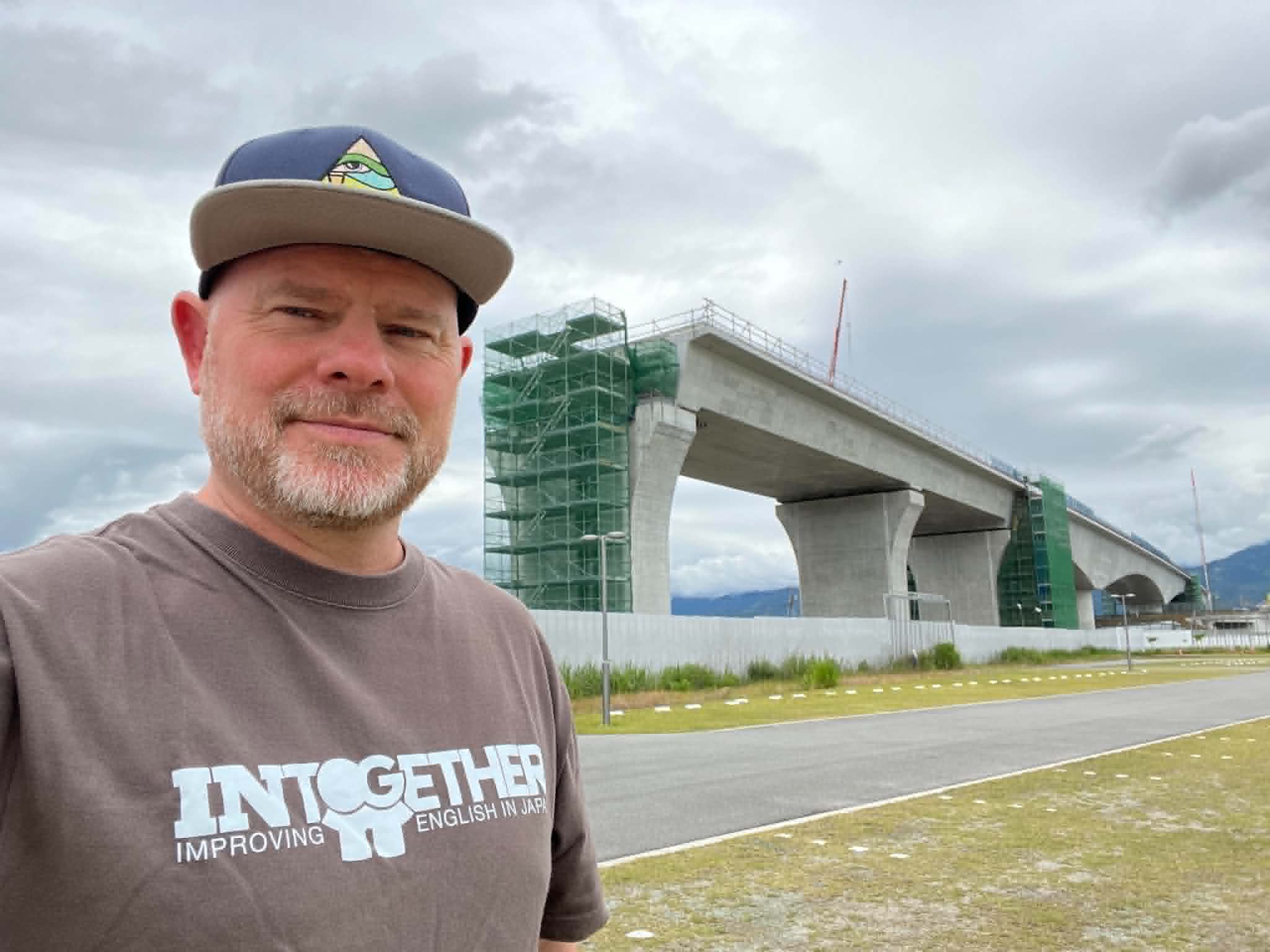
Japan is currently building the Linear Chuo Shinkansen less than five kilometers from my home. When completed, it will be one of the fastest trains in the world, carrying passengers from Tokyo (Shinagawa) to Nagoya in just 40 minutes, and eventually to Osaka in a little over an hour. During testing, the train has already exceeded speeds of 500 kilometers per hour.
To achieve this kind of speed and reach requires not only incredible engineering, but incredible cost. In the early 2000s, projected construction costs were estimated at around 5 to 5.5 trillion yen. Since then, the number has steadily ballooned. Current estimates place the Tokyo–Nagoya section alone at roughly 11 trillion yen.
All of this cost and engineering effort exists in pursuit of two things: speed and efficiency.
Not long ago, I had another experience that made me think deeply about travel.
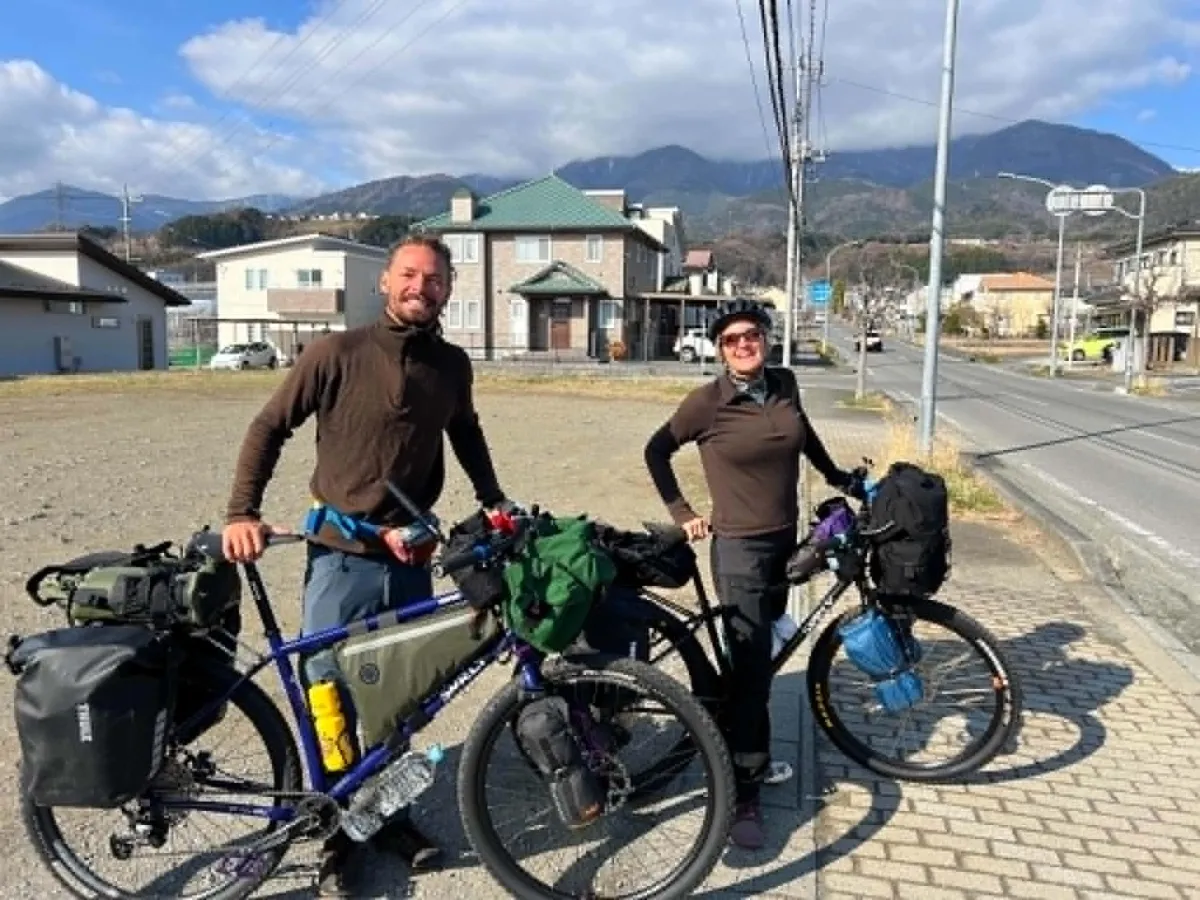
One evening in March, while walking my dog in the park around dusk, I met a couple named Mikkel and Sophie. They were slowly pushing heavily loaded bicycles up a small hill. Dark rain clouds were moving in, and with less than twenty minutes of daylight remaining, I offered them a place to stay rather than setting up camp in the rain.
Over dinner, I learned they were traveling across Japan for three months by bicycle. Their route would stretch from Tokyo to Fukuoka and eventually all the way up to Hokkaido. They planned to travel entirely on local roads, avoiding highways altogether. Each night they would either camp or ask locals if they could stay.
Their journey was the complete opposite of the Linear Shinkansen.
Slow. Unpredictable. Physically exhausting. But also deeply human. They would have stories. Unexpected conversations. Lasting memories. Moments of discomfort and discovery that would stay with them long after the trip ends.
Thinking about these two ways of experiencing Japan made me think about how we teach English.
Much of English education in Japan resembles the Linear Shinkansen. Students are expected to move quickly and efficiently through vocabulary lists, grammar points, and test preparation. The focus is often on speed, coverage, and measurable progress.
And to be fair, this approach has value.
Students do need structure. They do need vocabulary. They do need grammar. Without some degree of efficiency, learners can struggle to progress.
But there is also a cost.
In many classrooms, students spend enormous amounts of time and energy memorizing language that they rarely use in meaningful ways. They move quickly through material, but often without building emotional connection, communicative confidence, or lasting memory. Like passengers staring through the window of a speeding train, they see English pass by, but rarely stop long enough to truly experience it. The educational cost is enormous, yet the long-term return is often surprisingly small.
Experiential learning takes a different approach.
Experiential learning asks students to use language while solving problems, creating, exploring, discussing, presenting, traveling, laughing, failing, and connecting with others. It may appear slower on the surface. It can be messy. It can be inefficient at times.
But the return on investment is often far greater.
When language becomes attached to emotion, relationships, challenge, curiosity, and memory, it stops being merely “studied” and starts becoming part of the learner’s identity.
Students remember the English they used to order food on a trip.
They remember the presentation they were nervous to give.
They remember the conversation that unexpectedly succeeded.
They remember the joke that made everyone laugh.
These are not moments surrounding learning. They are the moments where learning happens.
Of course, no one would argue that Japan should abandon trains and travel only by bicycle. Speed and efficiency matter. The Linear Shinkansen will connect cities and create opportunities in ways that slower travel never could.
But if we want students to truly understand English, not just observe it from a distance, we sometimes need to encourage them to get off the fast-moving train.
Because the deepest learning often begins when we slow down enough to experience the journey itself.
Brian Shepherd
Worldwise